
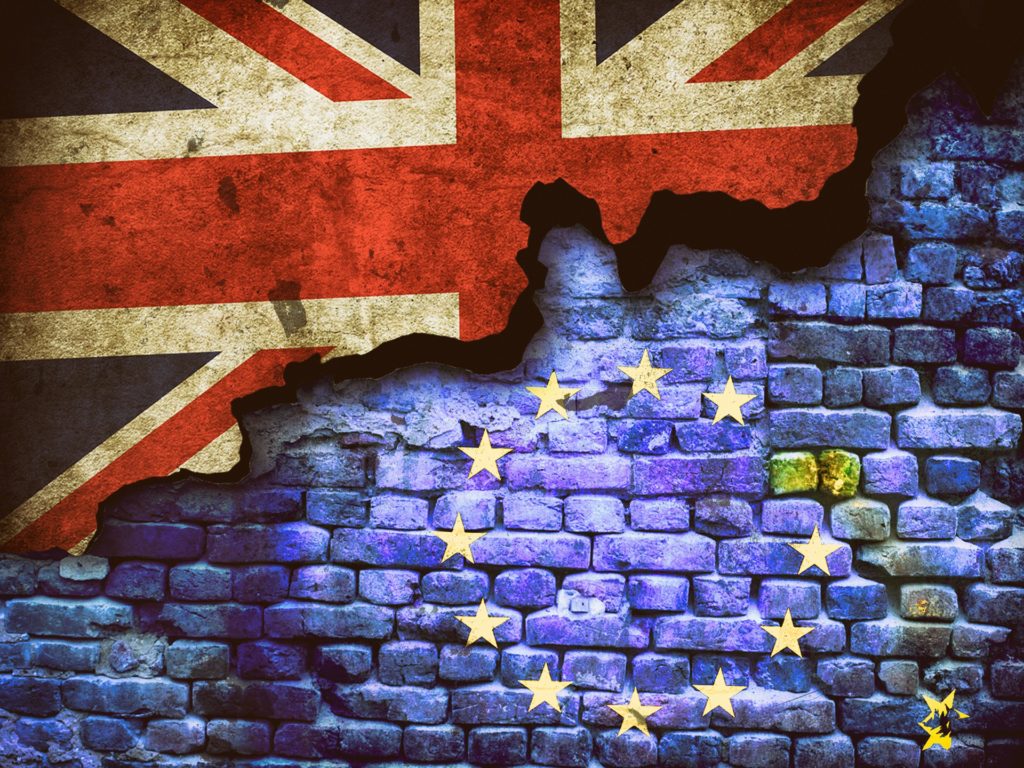
Later this week (December 14) EU leaders will meet to ratify the report agreed by Prime Minister, Theresa May and EU President Jean Claude Juncker last week.
DUP leader, Arlene Foster, declared herself “pleased” with Friday’s ‘deal’ but with some areas needing further work.
And, while it is unlikely that the 27 EU countries will reject the report, this is just the first phase in the Brexit process.
For Northern Ireland it is the next stage that will be one that will be closely examined by businesses, despite the promise of no hard border.
The trade talks that should begin in earnest early in the 2018 will deal with the future trade with EU countries and the UK.
For Northern Ireland exporters the current strength of the pound makes their products cheaper abroad, but any trade tariffs or customs duties may eat into profitability.
The flip side is that imports are currently more expensive, and any increased costs will hit food retailers and the hospitality sector.
Chief UK negotiator, David Davis, has given a commitment that the border with the Republic of Ireland will remain open.
He said: “I think if we don’t get a deal we’re going to have to find a way of making sure we keep the frictionless border – as it were an invisible border – in Northern Ireland.”
What shape that takes remains to be seen, with various discussions about whether technological or intelligence-led solutions can be implemented.
Under the deal that was agreed last week existing “regulatory alignments” such as cross-border energy and all-island agricultural standards will remain after Brexit.
Any changes or new regulations will have to be ratified by the Northern Ireland Assembly – that is currently not sitting.
If there is a Northern Ireland Executive and Assembly by the end of March, 2019 it would have a powerful bargaining position as regulations could, in theory apply across the rest of the UK.
However, there are many ‘what ifs’ to be considered. The lack of a devolved government being just one. Others concern the trade talks and what relationships there will be across Europe and any transition period.
The final shape of the EU Withdrawal Bill is another, with the public and private sectors having to examine what clauses apply to them.
And, while the deal spoke about the protection of EU citizen rights in the UK post-Brexit the value of the pound has already seen many leave, potentially leaving a skills gap for agriculture and hospitality.
Additionally, while Bombardier – currently in a trade dispute with the US – has agreed a partnership deal with Airbus, what shape that will take after 2019 is something that the industry will have to work through in detail.
It is that detail that the Northern Ireland Secretary of State James Brokenshire believes that can be worked through and a hard border can be avoided as part of the trade deal.
“This bold free trade agreement that we want to secure is very firmly in Ireland’s interests, given the nature of trade between Ireland and the whole of the United Kingdom,” he said.
“That’s why we go into this second phase with confidence that we can secure that positive outcome, which is frankly the best way to solve this.”