
2017 was a year of big science news, from Space X successfully testing a recyclable rocket booster, witnessing two neutron stars colliding, and scientists at Harvard University making the claim that they had created hydrogen metal for the first time in 80 years of trying.
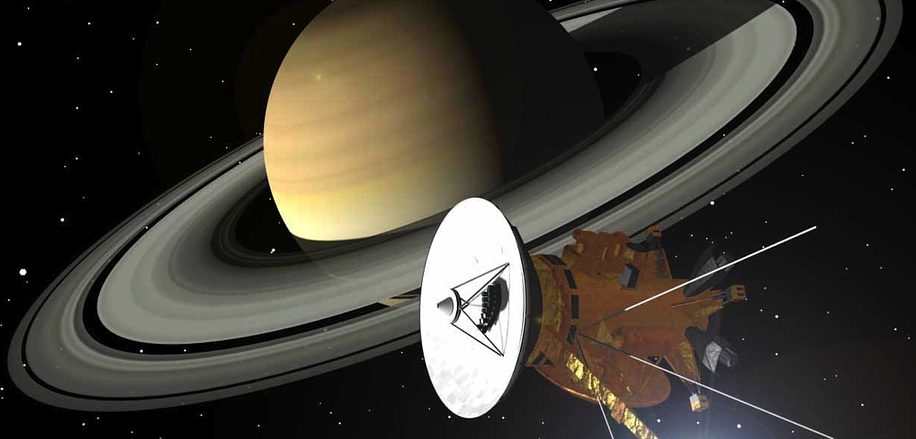
One of the standout moments of the year, however, was the end of a long voyage for the Cassini spacecraft. Here’s a rundown of its epic journey through the cosmos:
1. Cassini’s launch – 1997
Most of us look into the night sky with wonder at the mass of celestial bodies hidden in the dark blanket of space. While most humans can only see using telescopes on a clear night, for some people throughout history this has never been enough and one mission born from this cosmic wonder was the Cassini Spacecraft.
In 1980 a joint mission between the E.S.A (European Space Agency) and N.A.S.A (National Aeronautics and Space Administration) was first suggested but wasn’t agreed until 1988, with a plan to launch the Cassini orbiter destined for a long trip spanning 20 years that would end in a unique blaze of gory.
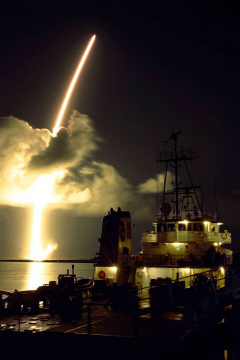
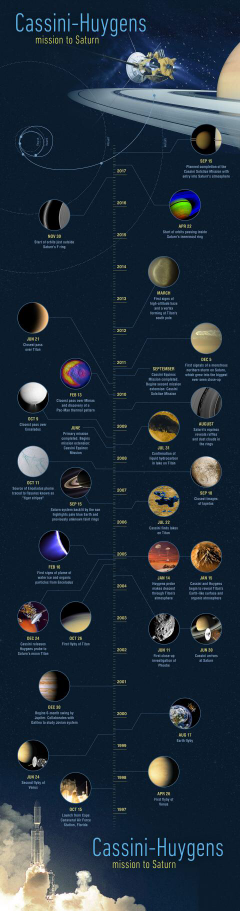 On 15 October 1997, Cassini was launched from Cape Averal in Florida. On 25 April, Cassini came within 176 miles of Venus’s surface using its gravity to boost its speed to 4 mile per second. On 17 August Cassini flew back within 700 miles of Earth for another gravity boost, rocketing away to Jupiter – the largest planetary body in our solar system. On its way it explores the asteroid belt between Mars and Jupiter.
2. Cassini’s Discoveries 2000 – 2016
On 30 December 2000, Cassini joined up with the Galileo spacecraft to give a new view of our system’s largest planet. By April 2004 Cassini began its approach to Saturn and for several months it explored Saturn’s moons and even discovered two new moons called Methone and Palmer in May 2004.
On 1 july 2005 Cassini inserts itself into Saturn’s orbit and over several years saw liquid water on Saturn’s moon Enceladus, discovered new rings around Saturn and found lakes on the moon Titan. In 2010 the mission was extended until 2017 for further exploration.
During 2015/2016 Cassini made its last fly by of Saturn’s moons and witnessed jets of ice reaching miles above the surface – some were actually feeding the ring system of Saturn in a beautiful cosmic dance between the moon and its celestial host. It also charted the highest peaks of Titan and found Titan’s lakes to be mostly made of pure liquid methane. Yikes, think I’ll stay on the beach!
3. The end of a 20 year voyage – 2017
At the start of 2017, Cassini began more daring dives into Saturn’s rings with the first being in April 2017. It was the start of 22 scheduled dips into the rings giving a unique view of our solar system.
And on 15 September, to avoid contaminating, if possible, (using that term loosely) environments that could support micro biotic life on Titan and Enceladus, Cassini started its final descent into Saturn’s atmosphere, taking a sample before being destroyed by the violent atmosphere. While it met with a fiery end, Cassini is just one example of our species ingenuity to see the hidden beauty of our Cosmos.
Check out this video by D News about one of the many pieces of data Cassini sent back and the meaning it could hold: