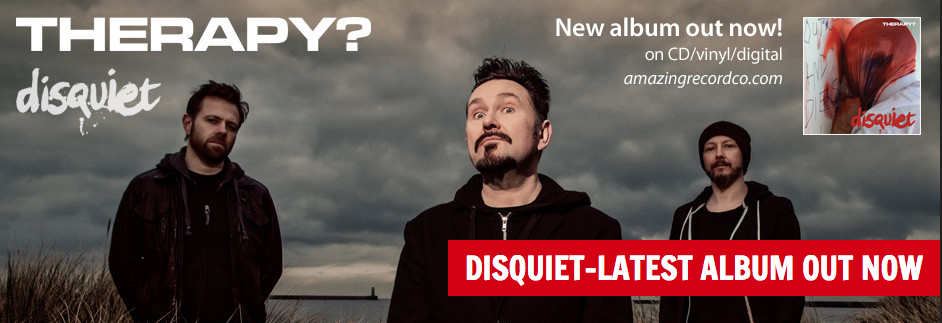
When it comes to longevity in the music business no one knows the secret to success better than Ballyclare rocker Andy Cains of Therapy?.
Since bursting onto the scene in the early 1990s despite having 15 studio albums behind them the band are probably best known for their 1994 album Troublegum.
On Friday night Andy, Michael Keegan and Neil Cooper took to the stage at Belfast’s Ulster Hall to support veteran rockers The Stranglers.
And for Andy it marked his career coming full circle since seeing them in his younger days.
He explained: “The Stranglers are one of my favourite bands of all time. I remember seeing them in the Ulster Hall years ago as a fan, and we were shortlisted for the tour and got on it. The gig is really important to me because it’s coming full circle, from going and seeing them as a fan to having played the Ulster Hall ourselves, to going and sharing the stage with them.”
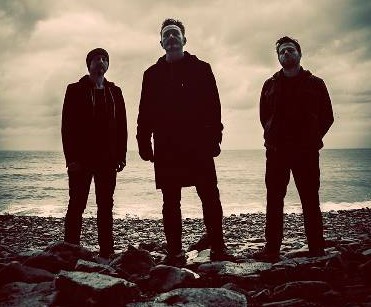
Therapy? have always been known for their down-to-earth nature and deep connections with home, one of the reasons they’ve remained so popular with the home audience.
However, for Andy, staying alive in the business was more of simple survival rather than a plan and he admits that while many bands are criticising the significant changes in the music industry, Therapy? have embraced them.
“We started in 1989 and started touring in late 1990. When we started touring most people didn’t own a mobile phone, or personal computer, or tablet. There were borders up around Europe and there were different currencies. That’s how long the band has been going. Whenever we went on tour we had to get different currencies in advance and use call boxes.
“Everything else, we just adapted. As things have gone on we have to keep up with what’s going on. In around 2001 or 2002, we were in danger if we didn’t get things together. I think the music industry is in a really good place at the minute. Everyone got over the seismic shock and just got on with it.
“I think if you talk about how everything was better in the good old days it’s bad for you. We’re old enough and wise enough to know that you need to embrace it and go with it.”
And Cairns knows all too well that any band wanting to survive now needs to stay ahead of the curve.
He said: “The fact we can put something out this morning on Instagram, and let people know how the new album is doing, and people all over the world can find out about it straight away is amazing.
“Therapy? have always toured worldwide and our fan base has kept us afloat – we have always toured in as many countries as possible, with different sized venues to different amounts of people. But we’ve always made sure we’ve toured Ireland and Britain.
“But it’s great that someone in Portugal can keep in touch with what Therapy is up to without having to wait on the ‘standard’ media as it would have been in the 80s and 90s. It’s great.”

Pic: www.facebook.com/Therapyofficial
For band like Therapy, with their experience of the industry they know it’s not just about the one-hit wonder culture of Simon Cowell, but about playing the proverbial long game.
“It’s a matter of patience” he revealed.
“It’s the nature of the business that everyone wants something to happen really quickly, and for everything to be of utmost importance, and I think what we did as a band was we got used to the fact that you have to be patient.
“We were very lucky, we started in 1989 and by 1994 we had done four albums and had toured the world quite a lot of times and we were popular.
“But what happens is, if you look at the history of music, especially music like, agitated guitar music, it resonates a great deal with younger people initially, and what happens is as those people get older, when they grow up, and go to college, and have kids, music doesn’t have the primary importance it did when you’re 14, 15, 16.
“Sometimes you wonder where the masses of fans you once had might be, but they’re just living their lives like everyone else. But if you’re patient, those people come back, because those people’s kids grow up and they get their time back. That’s what we’ve realised, that trends come and go.
“Whenever Therapy? started, people tried to call us a grunge band, and we avoided being lumped in with all that, and then next thing you know because of tracks we had like Innocent Acts people said that we were responsible, in some way, for new metal and we avoided that. We’ve never been lumped in with a certain genre, and that’s kind of kept it healthy for us as well.”
Once hailed as the UK’s Metallica Therapy? have always known it was not about fitting in.
“The biggest key for us in patience” said Andy, “It’s so easy in this business to panic, or to think ‘my time’s come, I really need to get a DJ in, or change our outlook’, or the other big thing that bands do which is they panic and split up. And then they wait for five years and come back. I think with Therapy?, we’ve always just got on with it.”
And as a result of this constant working and touring Therapy? were the band that never went away.
“We always kept working. In the UK and Ireland for example there might have been a three-year gap between record releases, but we didn’t go away, in those three years we were playing all over the world. So, we might not have had a record out, but we were doing something and we kept ourselves active.
“I think it’s a mind-set, because of where we’re from in east Antrim. Even when we had a great deal of success in the 90s and we were selling hundreds of thousands of records, we never thought we were rock stars.
“Before we sold loads of records, we had years and years of going round the world trying to make things happen, and we realised the transience of the whole business. We had to be careful and make sure that we were all OK mentally, and that we could deal with this.
“We have this catchphrase, we were never really that bothered if we were invited to Elton John’s ball or party. If we weren’t playing golf with Eric Clapton it’s not a big deal. It was about being in the band and that was enough for us.
“Because of where we’re from and the way the band had started, it meant that we weren’t absolutely gutted whenever we weren’t on the cover of NME anymore.”
Staying true to themselves and not buying into the “rock star culture” has always been important to the band.
“A lot of our friends have been there from the very beginning, and they’re still here now” explained Andy.
“Also, the way that we write music, we’ve always been very aware of the absurdity of what we do.
“Not just us, but the absurdity of the entertainment business, and we’ve kept an eye on that as well. When you hear of bands falling out over certain things, you realise it’s not the most important thing in life, and it’s not worth falling out with people over it.”
It really is about the music for them, Andy hasn’t pursued any other career paths during his time with Therapy?.
“The band has been pretty much it. I’ve worked with other musicians, I’ve written quite a lot, but to be honest this is what I do. The band is what I do. When I’m not working with the band I spend a great deal of time with my family. This new record we are bringing out will be our 15th album.
“We’re very realistic. Our whole approach to the aesthetics of what we do as well, we’re very kind of stoic, and we’re not really into the trappings of rock stardom. There’s a certain mind-set with a lot of musicians, which a lot of musicians don’t like to admit, which is that they love being rock stars.
“They love everything that comes with it. To someone on the outside, that seems like the dream. You think every day is like being in a video, and it’s not really, that’s one very small part of it.
“We’ve never embraced that whole side of it, and we don’t miss it. If someone pushes themselves in that direction, and then that thing gets taken away from them, they feel absolutely heartbroken.
“Also with people that were once famous, there seems to be a great sense of shame that you’re no longer famous, and they don’t want to stick their head outside anymore. We’ve never had that.
“We’ve just always ploughed on. Always kept on at it. Because we never built ourselves up to be bigger than we actually knew we were, we feel happy working in the environment that we do.”
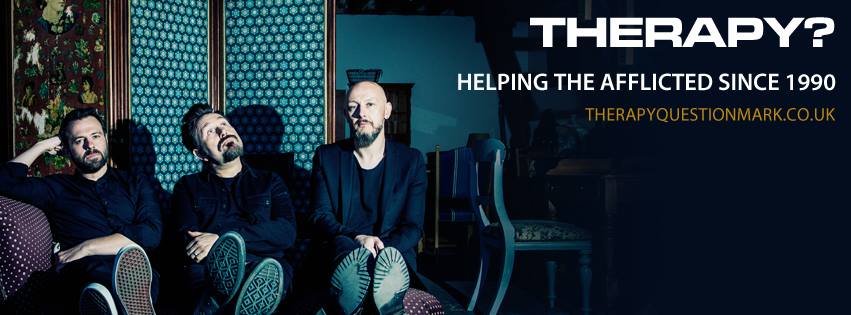
Pic: www.facebook.com/Therapyofficial
One thing that sets them apart is that compared to many acts Therapy? have always remained accessible to the fans.
But it wasn’t something they set out to do, it was simply their way said Andy.
“It was never a strategy, but I think it’s from our education in the music business. When we started out, the people we looked up to where the punk and hardcore bands, and most of them, we ended up playing with a lot of them, like No Means No, The Silverfish, and all these people, were approachable, they had no airs and graces. They would arrive in a van, set up their own gear, and stay on people’s floors, and that’s what we did for two and three years before we signed a bigger record contract.
“We didn’t know any different. When I was a kid growing up, people like David Bowie, and Lou Reed and James Brown, they were from another planet. I was a big fan of Prince, but I knew rightly I’d never bump into him on the Ormeau Road.
“That was our kind if upbringing, and I think it stands with us to this day.”
For more info log onto www.therapyquestionmark.co.uk