

By Claire Loftus
Owner, EVOLVE
When it comes to engaging employees in the workplace it’s an ever increasing challenge. With employee expectations changing rapidly and companies desperately trying to keep up it’s no wonder the end cost to the business is growing at an alarming rate.
Last year Hays did a survey of Northern Ireland workers, it found that 42 per cent of local employees were “dissatisfied or indifferent” about their current role.

The report What Workers Want NI also revealed 62 per cent of respondents said they would take a pay cut for better culture and half of them said they would be willing to take a pay cut of up to 10% per cent.
And it’s not just a local problem. Globally, according to the UK Gallup 2017 report, 87 per cent of employees around the world are not engaged and companies are experiencing a crisis of engagement that they may not be aware of.
The Gallup report concluded that companies with highly engaged workforces continue to outperform their peers by 147 per cent in earnings per share.
But what is the impact of high levels of disengagement? Gallup report that it results in less profits; more health and safety issues within the workplace; more theft; lower customer rating; lower productivity and higher staff turnover and more employee relations issues.
So what can companies do to tackle the epidemic of employee disengagement? A recent report The State Of Employee Engagement by Smith & Henderson HR Zone in association with Engage & Grow noted that in 2014 the main priorities for increasing engagement were to improve communication, develop employees and manage performance. Their subsequent research in 2016 confirmed this trend.
However, by 2018 the report reveals that priorities have changed in just two years resulting in organisations having to approach employee engagement differently in the fast moving socio-political climate.
The State Of Employee Engagement found that 78 per cent of organisations surveyed were focused on improving employee engagement (a rise of 8 per cent since 2016). Of the 22 per cent of organisations not focusing on improving employee engagement, ‘budget constraints’ was the most commonly cited reason.
It also revealed that in terms of trends shaping the development of an organisation’s culture, the increasing appetite for instant feedback, and the evolution of technology/automation, were the most commonly cited.
One of the top reasons for companies choosing to focus on employee engagement is ‘employee morale’, this is closely followed by the need to attract and retain talented employees and motivating employees to give their best.
A lack of budget, not believing it to be a priority and having insufficient buy-in from managers are all common reasons for companies choosing not to focus on employee engagement.
The numbers speak for themselves, according to Gallup a fully engaged workforce has on average 22 per cent higher profitability; 21 per cent higher productivity; 10 per cent higher customer engagement; up to 65 per cent lower staff turnover and 37 per cent lower absenteeism.
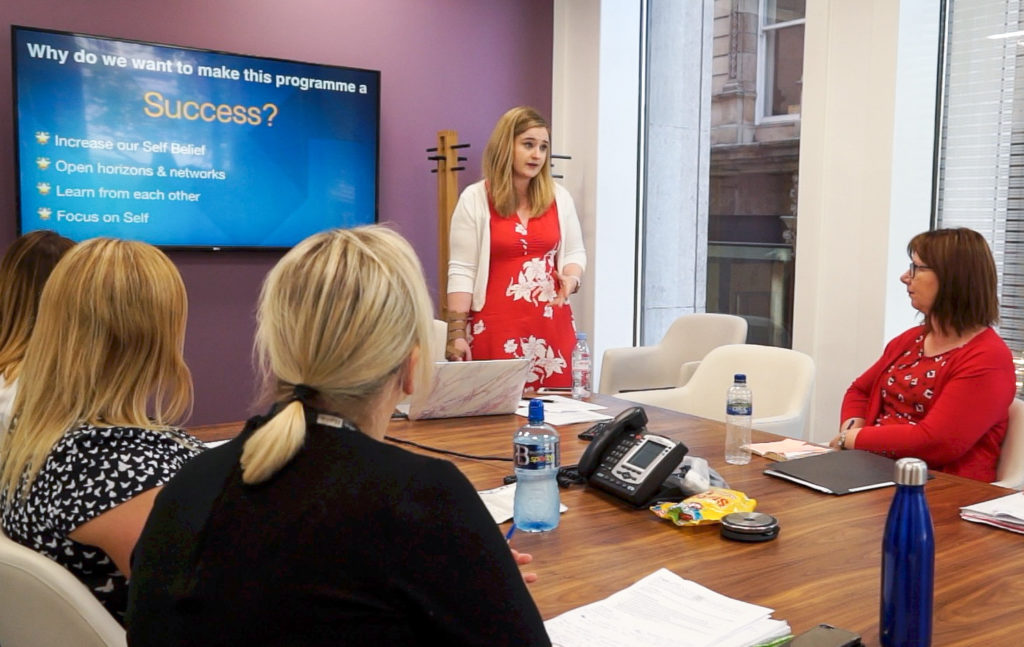
How do we combat employee disengagement? Traditionally companies would have adopted a yearly review method with employees. But The State Of Employee Engagement revealed 68 per cent of organisations running quarterly pulse surveys are satisfied or very satisfied with their survey approach, compared to only 51 per cent of those running annual surveys. For those running their survey less than every 18 months this fell to just 36 per cent.
Engage & Grow, a programme created by global influencer in the field Richard Maloney, is seeking to tackle the epidemic of employee disengagement head on. The programme, now available in Northern Ireland, is designed to activate the minds of employees by tapping into the finer point of neurology and the science of motivation.
Typically Engage & Grow global are reporting average increases in engagement of 361 per cent for corporates and government and 257 per cent for SMEs.
What’s clear is that the traditional approach no longer works to engage employees and mastering employee engagement is an investment that whilst some organisations are reluctant to outlay, reaps much bigger rewards on the bottom line.
Claire Loftus is the director of EVOLVE, a company that helps local businesses increase their productivity and performance through their greatest asset, their staff. EVOLVE is the only provider of Engage & Grow programmes in Northern Ireland.
Find out the impact of these employee engagement figures, how much disengagement is costing your business and what you can do about it at the Engage & Grow ‘Engage your Team to Energise your Business’ free session on Thursday August 23 from 2-4.30pm at Lombard House, Belfast. For more information log onto: https://bit.ly/2zp23Zy