
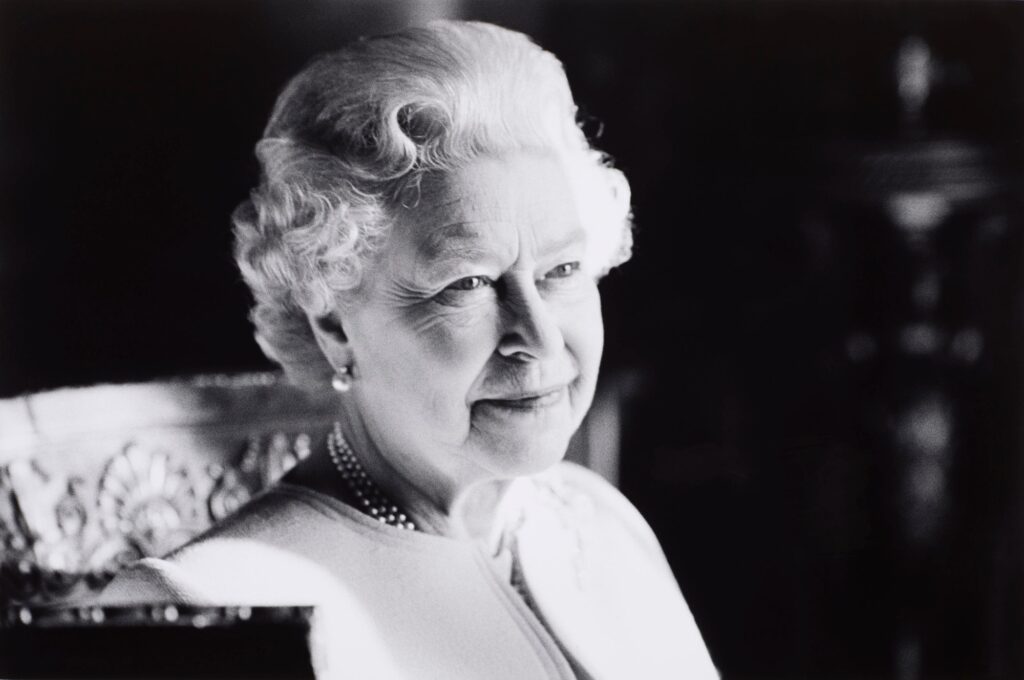
The attention of the world rests on the United Kingdom, following the passing of Queen Elizabeth II yesterday. The UK now enters a national period of mourning, which will last until the Queen’s funeral. With the meticulously planned Operation London Bridge now in action, Operation Spring Tide – the plan for the accession of her son, Prince Charles, to the throne – will also be put into motion.
Many of the exact details as to what is to be expected over the next few days remain to be confirmed.
For most people, the Queen had ruled all their lives, having celebrated her Platinum Jubilee earlier this year – marking a momentous 70-year reign. There will be many significant changes for the public to adapt to, and the following days will be a period of historical readjustment.
The most significant change is undoubtedly the fact that the United Kingdom, for the first time in 70 years, now has a King. Yesterday, the first decision of the King’s reign was made – his name, as he decided that he will be known as King Charles III. The King’s accession to the throne at the age of 73 makes him the oldest monarch to do so. With King Charles’ accession to the throne, the United Kingdom enters a Carolean Era.
The King’s wife, Camilla, will be known as the Queen Consort. A speech made by the Queen on the occasion of her Platinum Jubilee made this clear, as it was previously thought that she would be known as the Princess Consort.
Prince William now holds the title of the Duke of Cornwall and Cambridge; he does not automatically inherit the title of Prince of Wales – it is a matter of discretion for the King to opt to bestow the title upon his eldest son.
Immediately after the Queen’s death, flags were lowered to half-mast, as per Government guidance that “following the death of Her Majesty The Queen, all official flags, including the Union Flag, should be half-masted”. The Royal Standard, which flies over whichever royal palace the Sovereign is currently residing in, will not be lowered as it is symbolic of the continuation of the monarchy, and as there is always a living monarch.
D-Day: September 9, 2022
The day of the Queen’s passing is typically considered to be D-Day, and as such, the day immediately after her death is known as D-Day+1 with the proceeding days to be known as D-Day+2, D-Day+3, and so on.
However, as the announcement of the Queen’s passing came late on Thursday, D+0 will be considered Friday. This is because the late announcement on Thursday meant that there was not enough time to allow for the arrangements to be put in place in time for Friday. As such, Saturday will be considered to be D-Day+1.
At Midday on 9 September, bells will toll at St Paul’s Cathedral, Westminster Abbey and Windsor Castle. Churches across the UK will follow suit.
At 1pm a 96-gun salute to mark every year of the Queen’s life will be fired from various stations across the UK, including Belfast, Hyde Park, Edinburgh Castle, the Tower of London, Dover Castle and Gibraltar.
D-Day+1: September 10, 2022
The Accession Council will meet on Saturday to formally proclaim King Charles as the new sovereign. Typically, the Council convenes within 24 hours of the passing of the sovereign, however, due to the late nature of the announcement of the Queen’s death, the Accession Council will not be able to meet on Friday.
The Accession Council will convene at St James’s Palace, and 200 privy councillors will meet. The Council is presided over by Conservative MP and Leader of the House of Commons Penny Mordaunt.
They will meet first without the King. Afterwards, King Charles III will hold his first Privy Council, accompanied by the Queen Consort and Prince William. It is within this meeting that King Charles will make a personal declaration and oath.
The proclamation marking King Charles’ accession to the throne will be read in the open from the balcony above the Friary Court at St James’s Palace. It will also be read at the Royal Exchange in the City of London, as well as in other cities within the UK, including Belfast, Edinburgh and Cardiff.
Union flags will return to full mast at 1pm, to coincide with the reading of the proclamations; they will remain at full mast for 24 hours before returning to half-mast.
The King will hold his first audience with new Prime Minister Liz Truss, who only days prior had met with the Queen at Balmoral in order to ask to form a new government following Boris Johnson’s resignation. The King will also meet with the Cabinet.
D-Day+2 And Onwards
Procession Along Royal Mile
A procession is expected to take place along Royal Mile to St Giles’ Cathedral, Edinburgh on Monday 12 September. Whilst at St Giles’ Cathedral, the public may have the opportunity to file past the Queen’s coffin.
King Charles Will Visit Northern Ireland
King Charles will begin a tour of the United Kingdom, likely visiting Scotland first, then Northern Ireland, and lastly Wales.
King Charles will visit Hillsborough Castle, where he is due to receive a message of condolence. A service of prayer and reflection will be held at St Anne’s Cathedral, Belfast. King Charles will be in attendance.
At Rest in Buckingham Palace
Around 13 September, the Queen’s coffin will be transported to Buckingham Palace, where a small service will be held and attended by important government ministers, including the Prime Minister. It is currently unknown how the coffin will be transported, though it is expected that it may be flown from Scotland to London.
Lying In State
From Buckingham Palace, the Queen’s body will be moved to the Palace of Westminster, where she will lie in state in Westminster Hall. Upon arrival, the Archbishop of Canterbury will hold a short service.
Senior royals will, at some stage, stand guard around the coffin in a tradition known as the Vigil of the Princes.
The Queen will lie in state for about four days prior to her funeral, and the public will have the opportunity to visit and pay their respects.
The Queen’s coffin will lie on a catafalque, and the Royal Standard will be draped over her coffin, with the Imperial State Crown and the Sovereign’s orb and sceptre resting atop it.
The Queen’s Funeral
The exact date of the Queen’s state funeral is yet to be announced, however, it is expected that it will be held around 12 – 13 days after her death. The funeral will likely be held at Westminster Abbey.
The Queen’s coffin is expected to process on a gun carriage pulled by sailors, with senior members of the Royal Family to follow behind, as was the case for Princess Diana’s funeral.
The funeral service will be televised, with a two minutes silence to be held across the country. Dignitaries from across the world, including significant figures from public life, will be invited to attend the funeral.
Following the funeral, the Queen’s coffin will be moved to St George’s Chapel in Windsor Castle; here, a committal service will be held. The service is due to be televised.
The Queen will be laid to rest in the King George VI Memorial Chapel, alongside her mother, father and sister.
The coffin of Prince Philip, who was buried in the Royal Vault at St George’s Chapel following his death in April last year, will be moved to rest beside the Queen.