
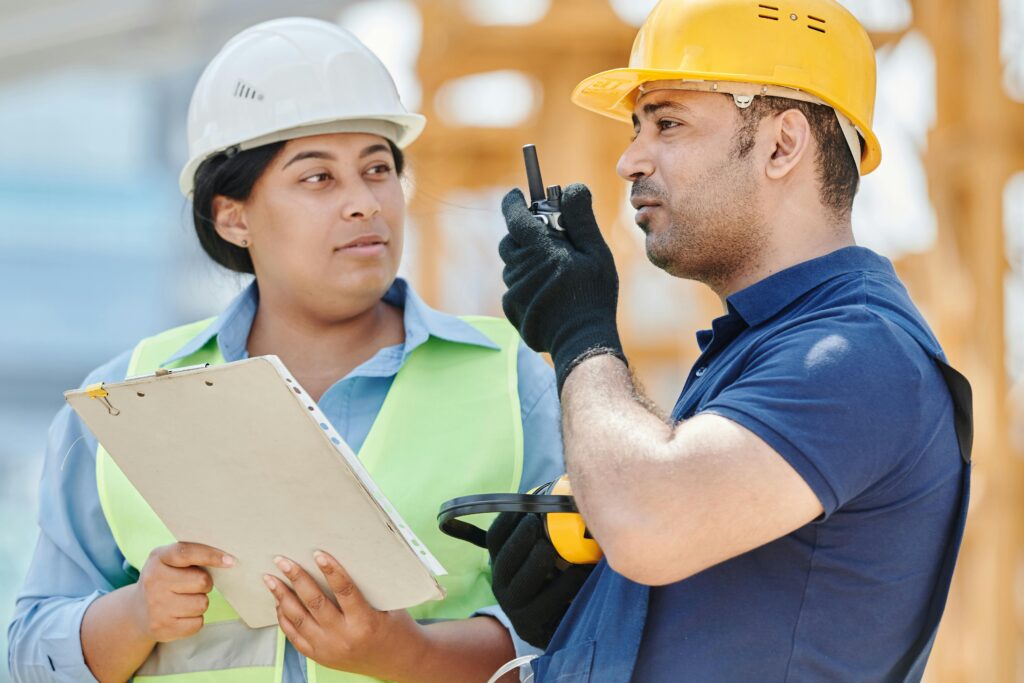
The construction boom we’re seeing across skylines and suburbs isn’t just about steel, cranes, and concrete. It’s about people, real people, whose skill, endurance, and quiet pride shape the structures we live, work, and dream in. Behind every new bridge, housing development, or industrial site are teams who show up before sunrise, solve problems no spreadsheet can predict, and carry the heartbeat of progress in their calloused hands.
Meet the Engineers, Operators, and Site Managers Shaping Progress
Walk onto any major construction site and you’ll find an orchestra of roles that make progress possible. Engineers pore over blueprints that turn vision into precision. Operators master the heavy machinery that moves mountains, literally. And site managers? They keep the rhythm, balancing safety, schedules, and sanity all at once.
These aren’t people who crave the spotlight. Most prefer to see their achievements stand tall in silence, a highway that saves commuters an hour a day, or a school that will outlast its builders. Yet, their fingerprints are everywhere, woven into the fabric of cities and communities. The modern construction site is a living lesson in teamwork: the welder who improvises a solution in seconds, the operator who knows his excavator by sound, the foreman who leads with calm authority when things go wrong. Progress, after all, is personal.
How Better Equipment Keeps Teams Safer and More Efficient
Construction might look like a world of brute force, but efficiency is built on intelligence—specifically, the smart machinery and technology that support human skill. Companies like Finning have raised the standard for what “well-equipped” really means. When machines run on reliability, operators can focus on precision instead of firefighting breakdowns.
That’s where quality materials come in. Using genuine CAT parts isn’t just about performance—it’s about trust. Teams depend on equipment that won’t fail mid-job, because in this industry, downtime doesn’t just cost money; it risks safety and morale. Every bolt, every filter, every system needs to work exactly as promised. The result? Fewer delays, smoother communication between man and machine, and more confident crews who know their tools are built to match their ambition.
The evolution of modern equipment has changed how construction feels on the ground. Machines now come with digital diagnostics, predictive maintenance alerts, and ergonomic controls that keep operators healthier. It’s not the gritty chaos of old, it’s controlled power, informed by data and human instinct working side by side.
Why Local Expertise Still Matters in a Globalised Industry
Globalisation may have expanded supply chains and introduced multinational players, but construction remains a profoundly local craft. The soil conditions, climate, and community expectations of a region can’t be imported or predicted by algorithms. That’s why local expertise, those who’ve worked the terrain, who understand the weather, the people, and the unspoken challenges, still matters more than ever.
Local teams bring something data can’t replicate: context. They know which materials endure a coastal wind, which methods minimise disruption in a small town, and which cultural nuances influence how a project is received. Global standards are valuable, but local wisdom is irreplaceable. It’s what keeps progress rooted in place.
The Unsung Rhythm of Resilience
At its heart, construction is about trust. Trust in your crew, your tools, and your own judgment when the unexpected hits. The men and women who build our world rarely get the recognition they deserve, but they keep showing up, through heat, dust, deadlines, and uncertainty, because they believe in the purpose of what they’re creating.
As the cranes stretch higher and the projects grow more complex, it’s worth pausing to remember that behind every blueprint is a person who made it real. The next time you drive past a worksite or admire a newly finished structure, think about the people who built it, not for glory, but for legacy.
Because the real story of construction isn’t about the boom. It’s about the builders.