
The end of the UK Shared Prosperity Fund on 31 March will have a significant impact on many disabled people seeking to secure and retain paid employment.
In Northern Ireland, around 11,000 people have accessed services funded through the UK Shared Prosperity Fund, including almost 4,000 disabled people who rely on specialist employment support designed specifically for their needs.
Helping more disabled people into employment has long been a priority for the Equality Commission. We welcome Minister Lyons’ commitment to this work and look forward to the outcome of his department’s consultation on the draft Disability and Work Strategy.
The introduction of the Local Growth Fund which replaces the UK Shared Prosperity Fund in April 2026 will inevitably impact on the work of the Minister and his department to tackle the disability employment gap in Northern Ireland, despite this funding not being directly within his control.
This new fund has no local Northern Ireland based oversight. It has a significantly reduced amount of funding available, a cut from £25million to £9.2million on the previous UK Shared Prosperity Fund. Its introduction will result in a reduction in the number and type of employment support services available to disabled people here.
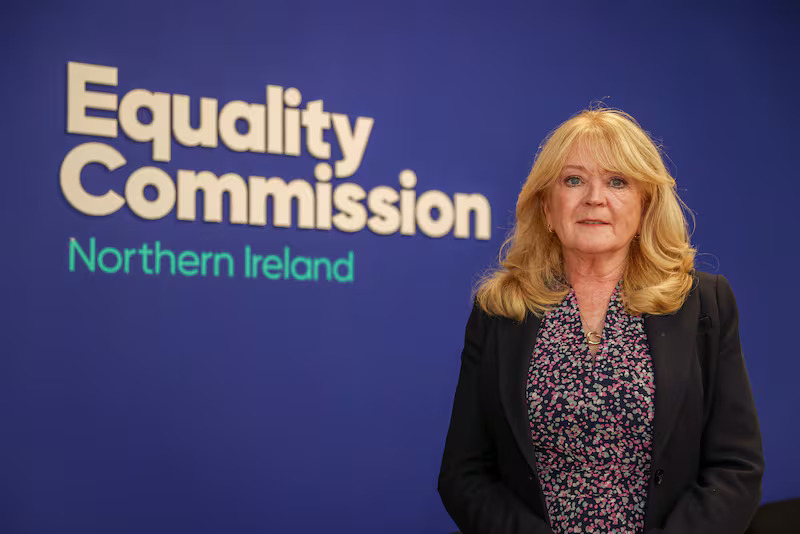
Speaking today, Geraldine McGahey, Chief Commissioner, Equality Commission for Northern Ireland said: “In Northern Ireland, the voluntary and community sector provides many of the employment support services needed by disabled people. Yet, these providers are facing budget cuts to their programmes of around 64%.
“Recent figures report that the disability employment rate here remains stubbornly low at 43.4%, while the disability employment gap is most recently reported as 40.3 percentage points and remains the largest of any of the UK regions.
“The Commission has highlighted the impact and resource shortfalls that arose from the loss of the European Social Fund which previously funded many of the employment support services used by disabled people. We now find ourselves at another cliff edge moment and once again disabled people seeking employment will be amongst those hardest hit.
“If we are serious about significantly reducing the disability employment gap that persists here, we need longer-term, multi-year funding programmes to ensure continuity of service delivery. Funding decisions must include consultation with key stakeholders and be communicated in a clear and timely manner.”
“Ultimately Northern Ireland simply cannot afford cuts to the very limited budgets that currently exist for this important and often life changing work.”